Saturday, September 28, 2013

A new breeding pair of Egyptian Vulture in Southern Italy


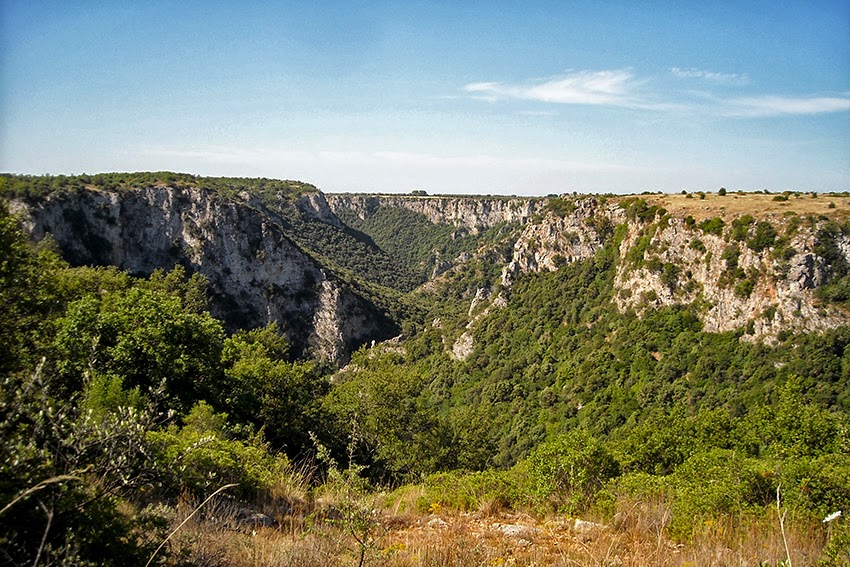
After ten years a breeding pair of Egyptian Vultures has nested in the "Gravina of Laterza". An impressive canion valley located in Apulia, southern Italy. The chick was born in late June while he fledged in September, a bit later for this species that starts the migration in late August. This is a great piece of  news because the italian population of this species is dramatically declining and less than ten pairs are still active. 
This nest was found and monitored from our member Gianpasquale Chiatante who is carrying out a Ph.D. at the University of Pavia on the study of bird communities of the Bari Province in Apulia. Here following three amazing picuters taken by Gianpasquale with the valley of Laterza, the chick in the nest and the two adults.



Sunday, September 15, 2013

XVII Italian Congress of Ornithology


Shots from the XVII Italian Congress of Ornithology
Trento 11-15 September 2013


Wednesday, September 11, 2013

MEDRAPTORS - XVII Italian Congress of Ornithology


In the next days the XVII Italian Congress of Ornithology will be held in Trento. On Friday Medraptors will present an oral communication with the proposal of long term monitoring of migrating raptors in Italy highlighting also some priorities of conservation in relation with the identification of new Important Bird Areas for the migration of raptors in Italy.
Moreover on Saturday Ugo Mellone will present the results of satellite tracking of three species of raptors and a poster with preliminary data of the diet of kestrels in Central Italy (here following) will be showed. Finally our colleague Mauro Santini from Ornis Italica will present an oral speech showing radar application to study bird behaviour.


Wednesday, September 4, 2013

Eurapmon on the special issue of Acrocephalus journal


A special number of Acrocephalus journal has been made to publish papers resulting from the Eurapmon network meeting that has been held in Mursia (Spain) in February 2012. 25 papers describe the conservation status and the research state for raptors in 25 European countries. Medraptors research activity is reported in the Italian and Greek papers.  
To dowload the papers click on the picture below.


Monday, August 26, 2013

New paper out now

A new Medraptors paper has been published on Avocetta journal. It is a paper reviewing what it is actually known about the migration of raptors in Greece. In the last ten years different research were made at three watchsite: National Park of Dadia-Lefkimi-Soufli, island of Antikythira and Mount Olympus. Moreover a study realized by satellite telemetry was carries out tracking Eleonora's Falcons. All these research showed different migration strategies performed by the different species of raptors. Marsh Harriers and Eleonora's Falcons migrate on a broad front over the Aegean Sea, Honey Buzzards perform a loop-migration being funnelled over the island of Antikythira in autumn but not in spring, Short-toed Snake Eagles (and perhaps Levant Sparrowhawks and Lesser-spotted Eagles) cross the sea at the  Bosphorus performing a long detour, finally Common Buzzards and Sparrowhawks are short-distance migrants wintering almost in Southern Greece and Crete. Some comments on the Egyptian Vulture status highlight the dramatic situation of the Balkan population of this species that is rarely observed migrating at the watchsites. 
If you would like to read the paper click on the link below:


Saturday, August 17, 2013

Migration of Black Kites in southern continental Italy

In this period our friend Emanuele Guido Condello is collecting preliminary data on the autumn migration of Black Kites in Southern Continental Italy. The area is located between the Tyrrhenian coast and the Calabrian Apennines. This long week-end of mid-August occurs the peak of the migration of kites in this region and several flocks including tens of individuals are moving soutward. 


Sunday, August 11, 2013

Migration of Black Kites in Central Italy

In central Italy Black Kites are leaving their breeding territories. Many of their nesting sites are already empty and there are observations of small flocks moving southward. They are going to Africa and in the next weeks they will overcome the Mediterranean Sea at the Channel of Sicily reaching Tunisia.
In the picture below our feeding point for Black Kites. We will be  waiting  them back  next spring.